Drawing release checklist
Make the model, drawing and purchase requirements tell the same story.
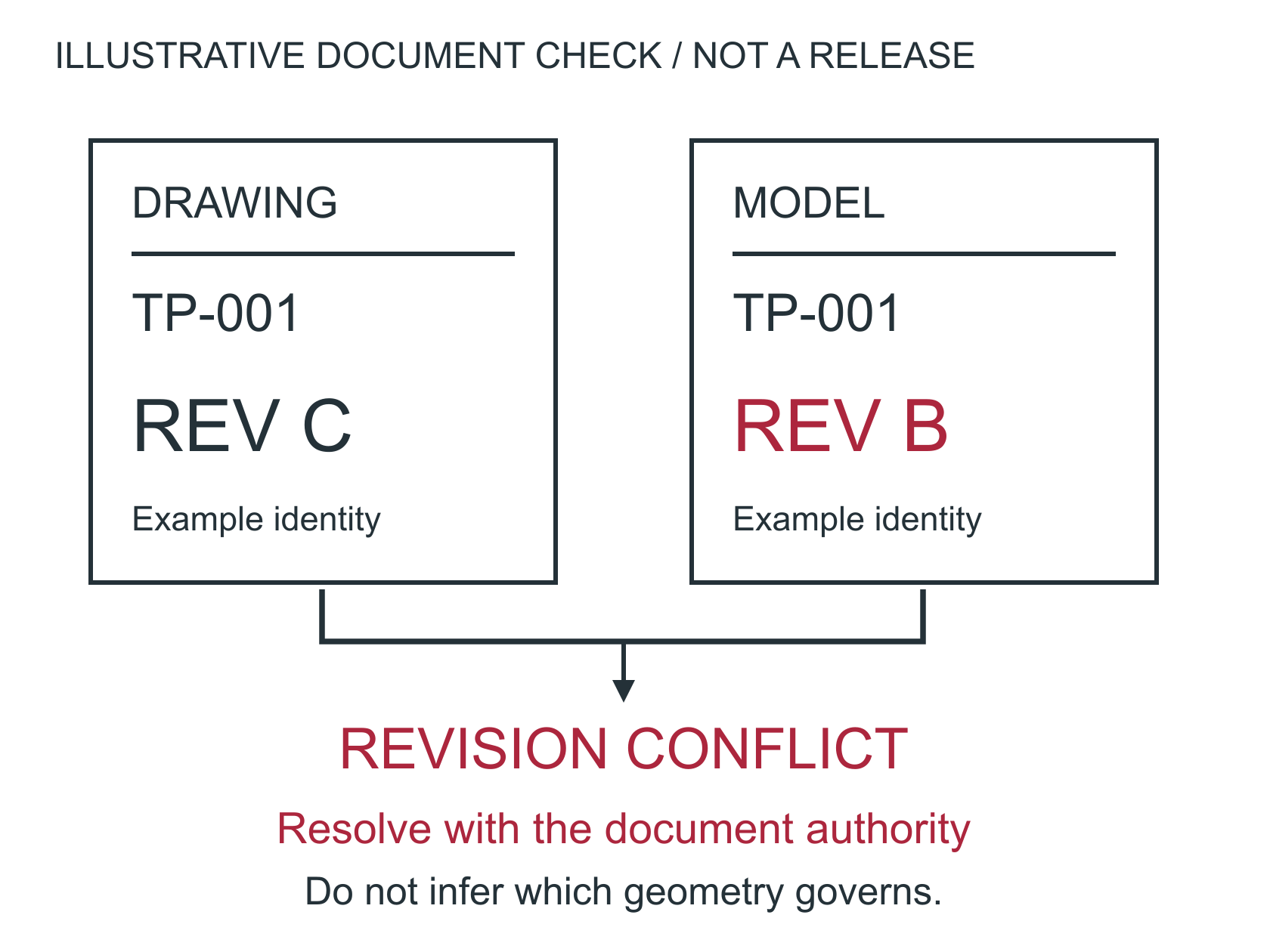
Example part TP-001 / drawing C / model B
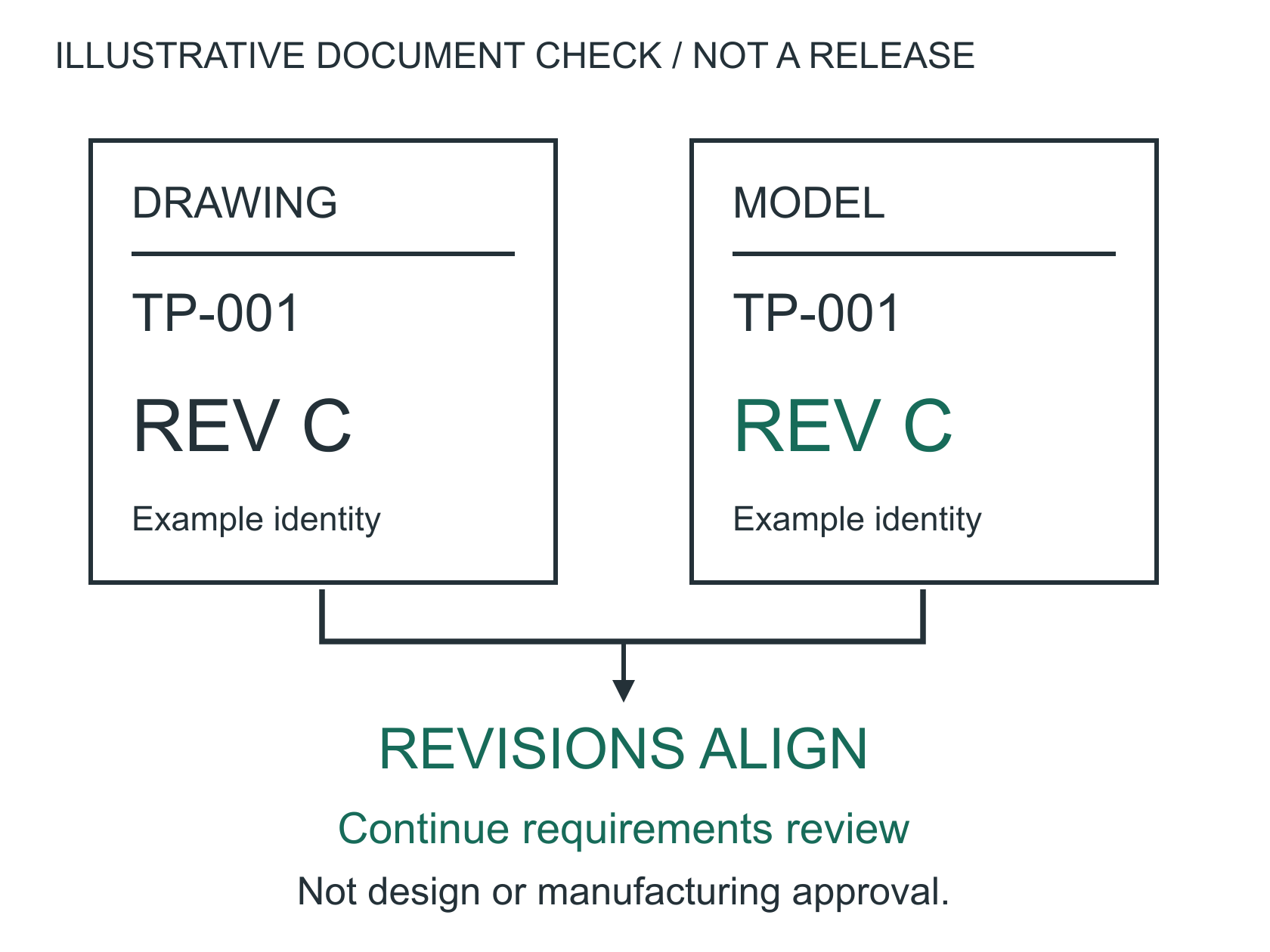
Example part TP-001 / drawing C / model C
Release gate: identity + revision + requirements + authority
Matching letters alone do not resolve conflicting geometry.03Identity, units & precedence
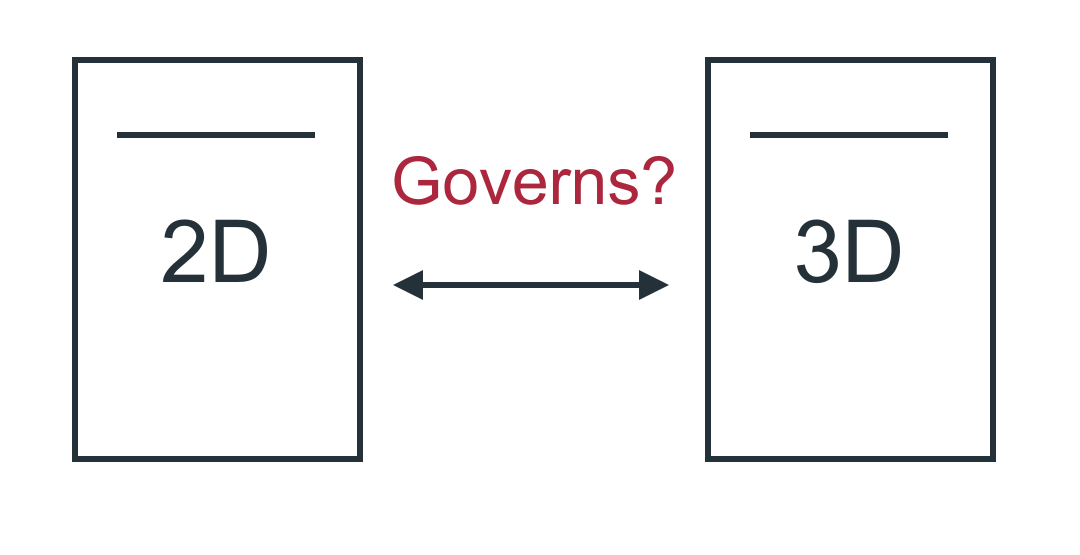
State part number, units, revision and what governs if the drawing and model conflict. Different revision codes may be intentional.
Resolve the controlled document relationship.
04Material & process definition
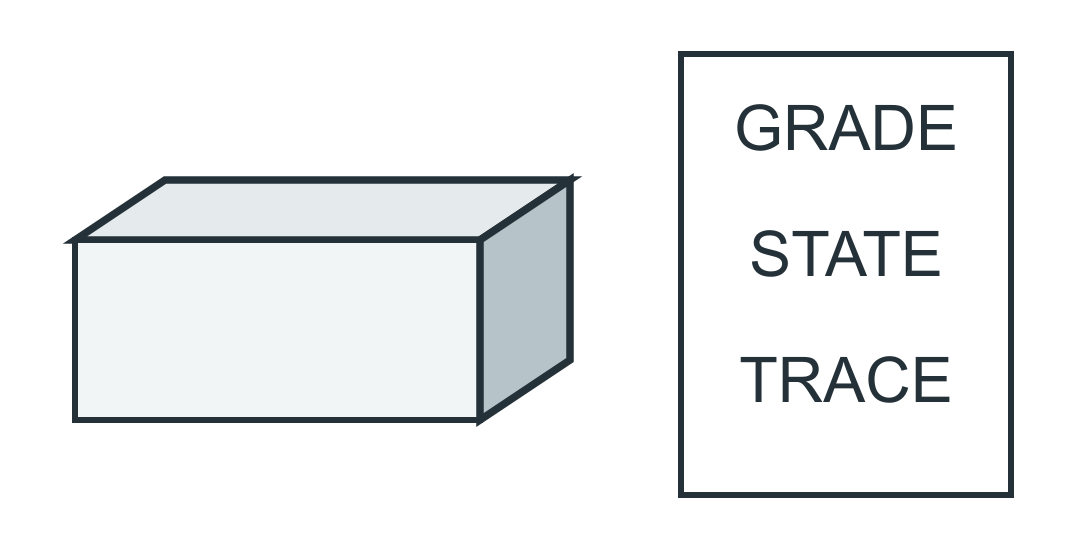
Specify grade, condition, approved alternatives and special processes. Include masking, cleanliness and packaging where required.
Do not authorize a substitution by omission.
05Inspection & delivery records
Identify critical features, acceptance condition and required inspection or process certificates in the purchase requirements.
Specify deliverables before production starts.
06Approved, secure handoff

Resolve deviations with the responsible authority. Arrange secure transfer before sending controlled drawings or models.
Never put controlled technical data in public forms.
Follow the document relationship defined by the customer. Different model and drawing revision codes can be intentional if explicitly controlled.
BEFORE RELEASE Protect fit, loads, sealing and required material sections when changing geometry.
- Match part number and revision across all files.
- Confirm units, scale and document precedence.
- State material grade and required condition.
- Resolve critical dimensions, threads and datums.
- Specify finish, masking and outside-process records.
- Confirm inspection, cleanliness and packaging needs.
- List approved deviations and who authorized them.
- Arrange secure transfer before sharing controlled data.