CNC Milling

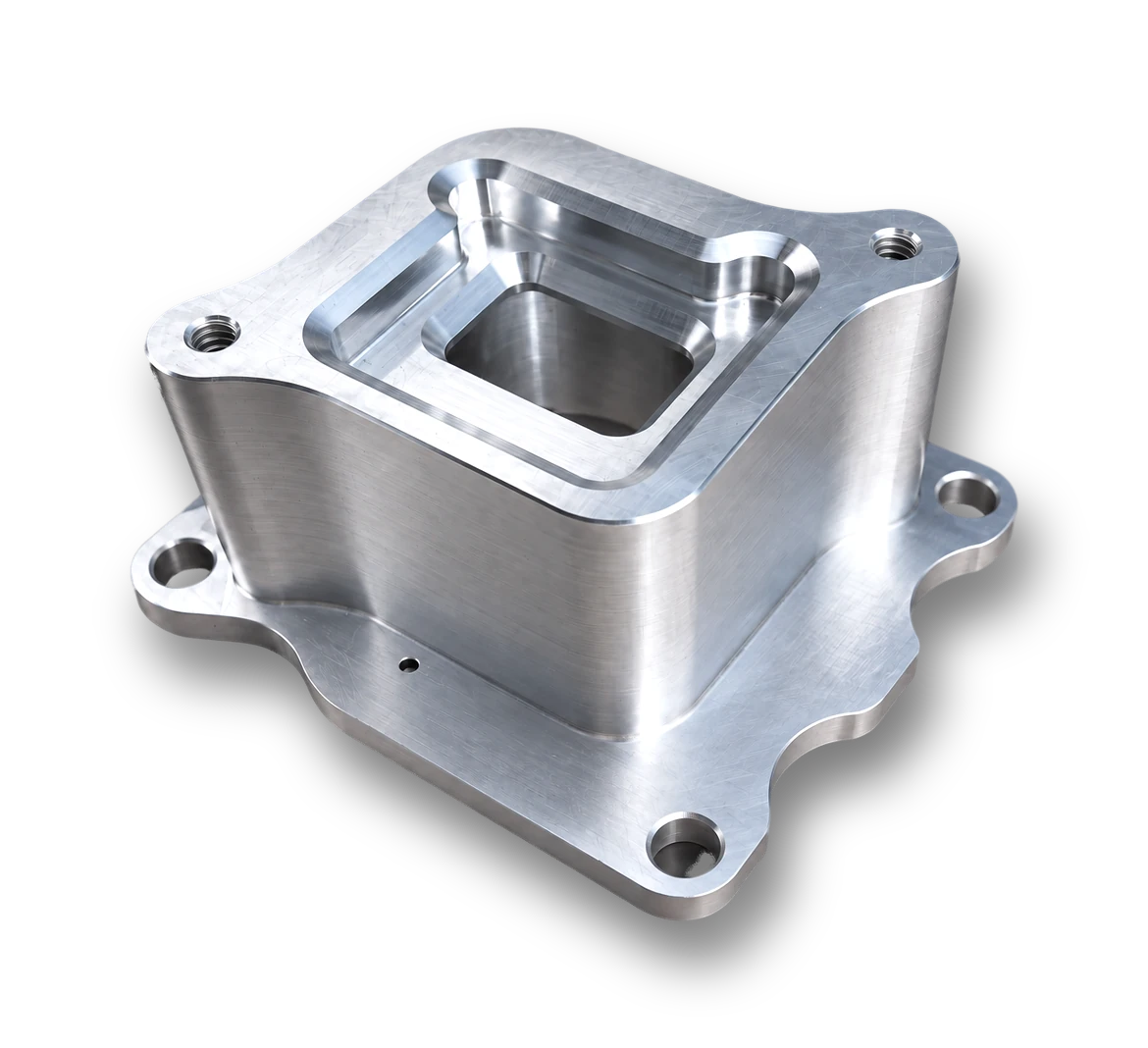
Our 5-axis, 4-axis horizontal and vertical machining centers give us different ways to reach pockets, bores, mounting faces, compound angles and complex contours. We choose the setup around your part geometry, feature relationships, and production quantity. The aluminum housings shown here were machined on a horizontal machining center.

  • Simultaneous 5-axis and 3+2 indexed milling
  • Complex 3D contouring and profiling
  • High-speed roughing and finishing, spindles to 18,000 rpm
  • Horizontal machining for multi-face work
  • Pre-production first articles through full production runs
  • Tolerances to ±0.0005"
  • Vertical mill travel (X/Y/Z) to 64" x 32" x 30"
See our CNC mills →
Machined flanged housing with stepped pockets, radiused corners and mounting holes

Horizontal vs. Vertical Milling

Two spindle orientations. Different strengths for your part.

A vertical spindle approaches the work from above; a horizontal spindle approaches from the side. With suitable rotary workholding, a horizontal can index the part to expose several faces without removing it from its fixture.

Horizontal machining

Best fit: Housings and other parts with related features on multiple faces, especially repeat production.

Advantages

  • Gravity helps chips fall away from the cut, reducing chip buildup and recutting.
  • Indexing can reduce reclamping and help maintain relationships between features on different faces.
  • Multi-part fixtures and pallet systems can support efficient repeat production when the job justifies them.

Tradeoffs

  • Fixtures and setup planning can be more involved, adding upfront cost.
  • Part access, tool reach, and clearance around the rotating fixture need careful planning.
  • The setup investment may not pay back on a simple, small-quantity job.
Vertical machining

Best fit: Plates, open-top pockets, and parts with most features accessible from one direction.

Advantages

  • Direct access and visibility make many setups straightforward.
  • Simple vise or plate fixtures can keep preparation economical for first articles and short runs.
  • Well suited to broad, flat work and flexible job changes.

Tradeoffs

  • Chips can collect in upward-facing pockets; coolant and toolpaths must manage them.
  • Features on several faces may require additional setups or rotary workholding.
  • Each reclamping adds handling and another opportunity for alignment error.

How we choose: Neither orientation guarantees better accuracy or a lower price. We balance access, fixturing, inspection, and quantity. The aluminum housings shown here run on a horizontal; our large-format vertical mills have 64 inches of X travel; compound-angle work goes to 5-axis. Axis travel is not a guaranteed maximum part size—tooling and fixtures also need clearance.

Further reading: 5-axis vs. 3+2 machining · Tolerance cost ladder

CNC Turning & Mill-Turn

Precision turning for shafts, bushings, pins, fittings, threaded components, and cylindrical parts. Multi-axis mill-turn centers, Swiss-type lathes and CNC lathes deliver repeatable accuracy on production runs and the first articles that lead to them.

  • Mill-turn up to 9 axes: B-axis milling head, twin spindles, finished in one chucking
  • Swiss turning, bar 3–32 mm, with live tooling and sub-spindle back-work
  • OD/ID turning, boring, and threading; bar to Ø3.2" on mill-turn centers
  • High-RPM finishing for mirror surfaces
  • Chucker work for small precision parts
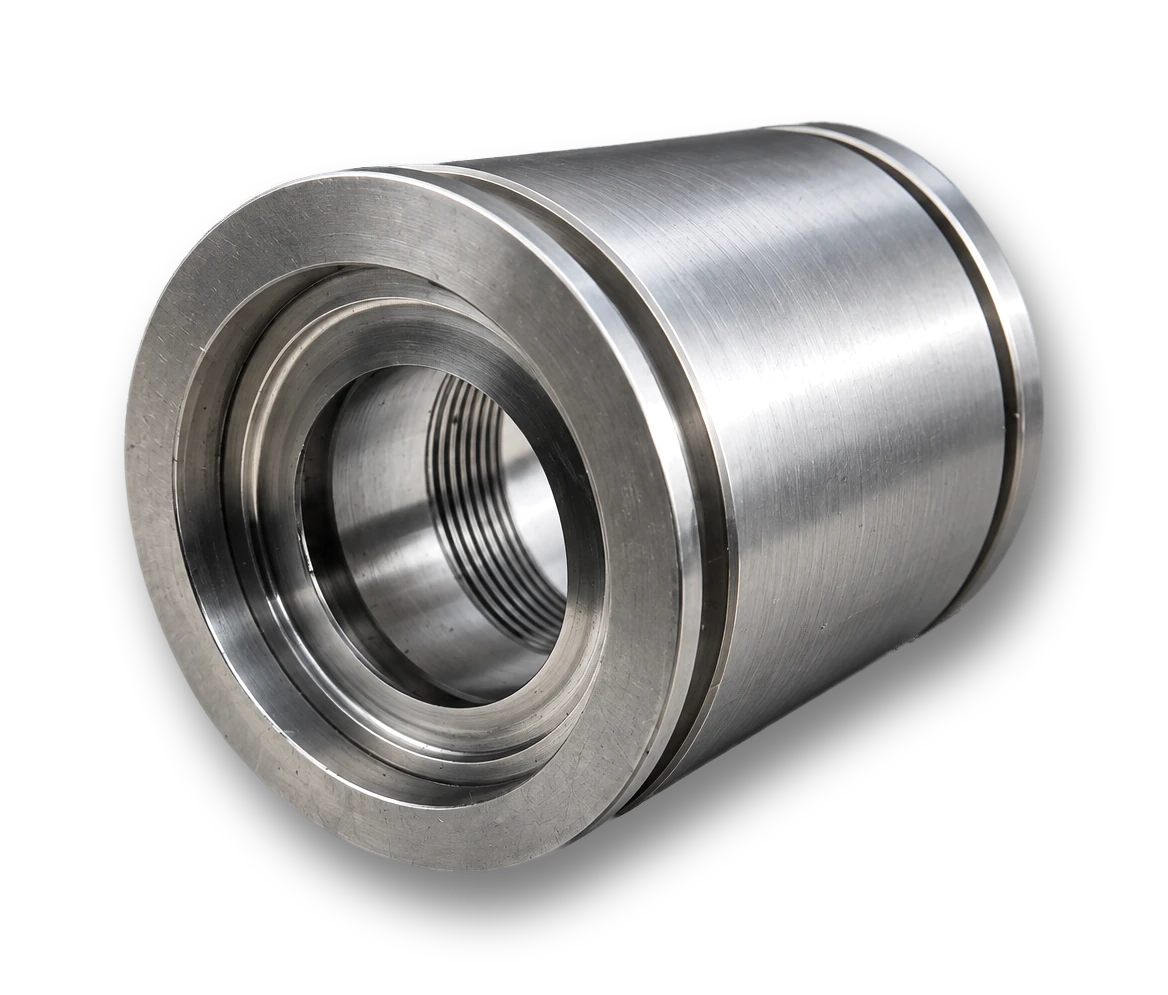
  • Combined milling and turning for parts such as the sleeve shown here
See our turning equipment →
Mill-turned sleeve with a stepped bore, internal threads and end flange

Wire EDM & Surface Grinding

Sharp inside corners, hardened steel, and flat, parallel datums

5-axis wire EDM

  • Rotary axis; work envelope to 23.6" × 15.7" × 12.2"
  • Taper cuts to ±30° over 4" thickness
  • Wire 0.004–0.012"; finishes to 4 µin Ra

Best fit: Sharp inside corners, hardened steel, gears and punches.

Surface grinding

  • 7" × 13" capacity
  • Flat and parallel to 0.0001"
  • Datum grinding after heat treat

Best fit: Plates, gauge blocks and wear parts.

Further reading: Wire EDM vs. sinker EDM vs. laser

Finishing & Outside Processing

Deburring, tumble finishing, bead blast and ultrasonic cleaning are done in-house, so parts leave clean and ready for assembly. Heat treating, anodizing, plating, passivation and other special processes are done through vetted outside partners, and we verify hardness in-house after heat treatment.

  • Hardness verification on our Rockwell tester
  • Vibratory tumble finishing and glass-bead blast
  • Ultrasonic cleaning
  • Deburring and edge finishing
  • Laser marking of part numbers, revisions and serials
  • Heat treating, anodizing, plating, passivation and powder coating through vetted outside partners
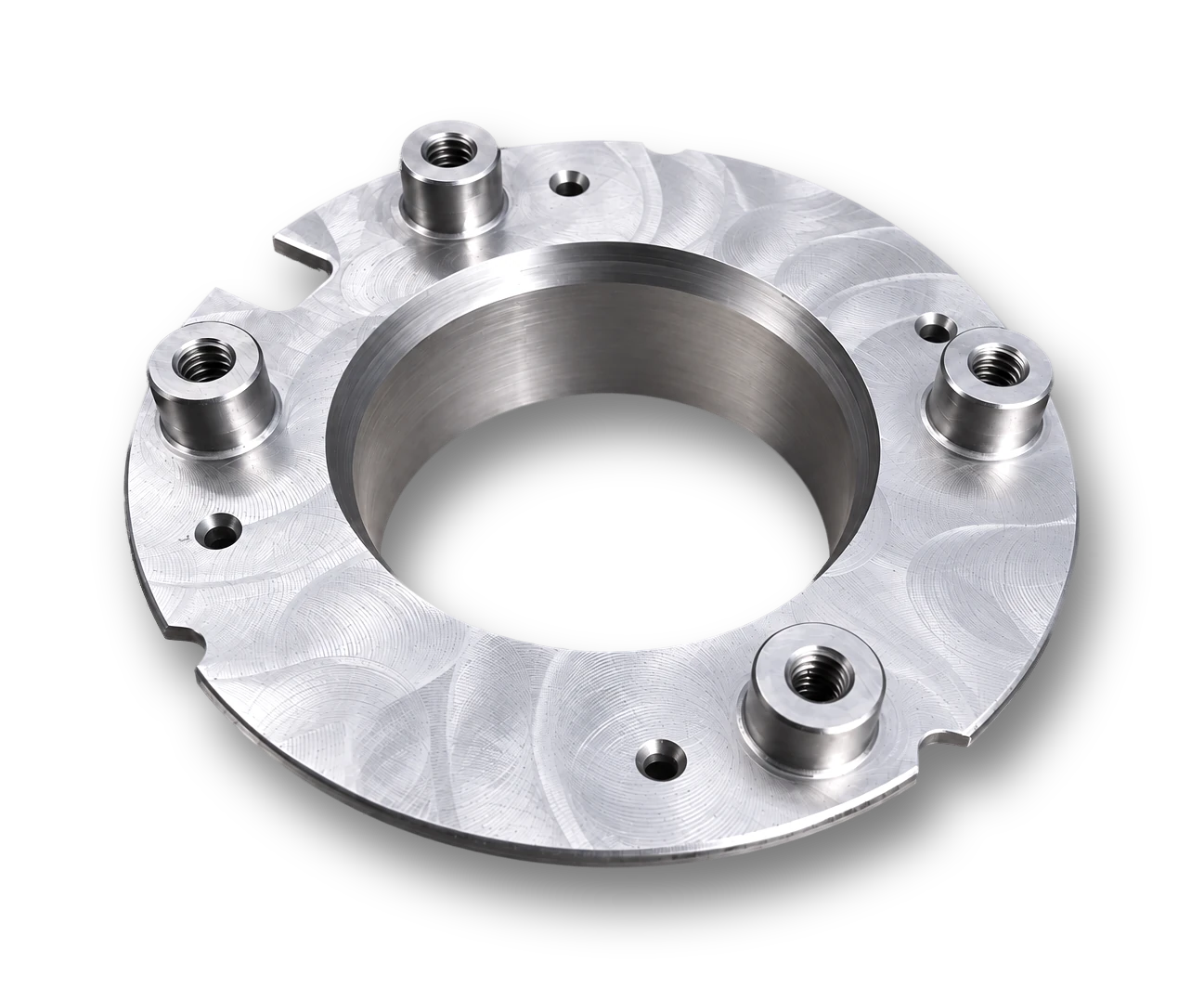
Circular flange with visible face milling marks, threaded bosses and perimeter notches

Pre-Production & First Articles

Before a part goes into production, we machine the first articles that validate fit, function, and process. Pre-production work in metals and engineering plastics lets your team de-risk the design before committing to volume — first articles and validation batches that are heading toward production runs.

  • First article and validation batch machining
  • Metals and engineering plastics (Radel, PEEK, Delrin, etc.)
  • First article inspection with full documentation
  • Design-for-manufacturability feedback
See our inspection process →
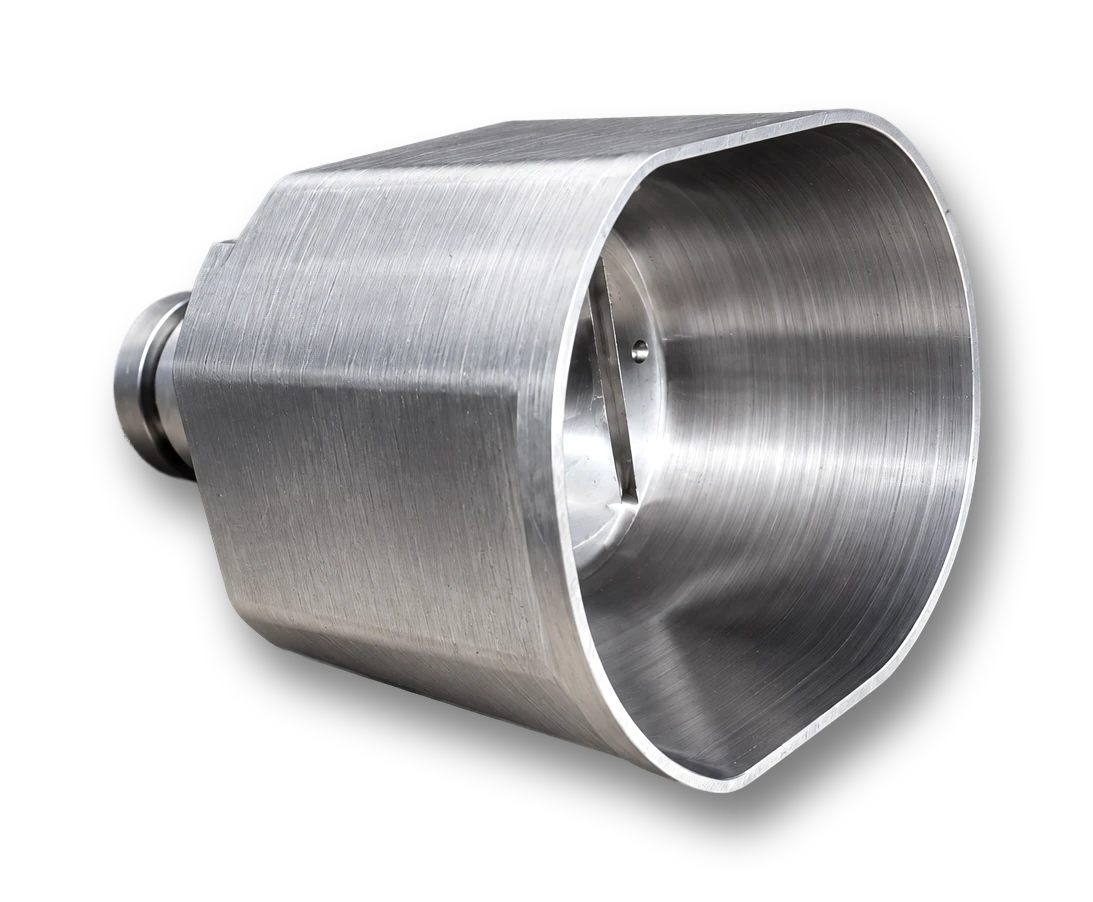
Thin-wall housing with a deep rounded-square cavity and rear stem

Materials We Machine

We work with a wide range of metals and engineering plastics

Metals

Aluminum (6061, 7075, 2024) Steel (4140, 4340, 1018) Stainless Steel (303, 304, 316, 17‑4PH) Tool Steel (A2, D2, O1, S7) Brass Copper Titanium Inconel

Plastics & Composites

Delrin (Acetal) Nylon PEEK UHMW
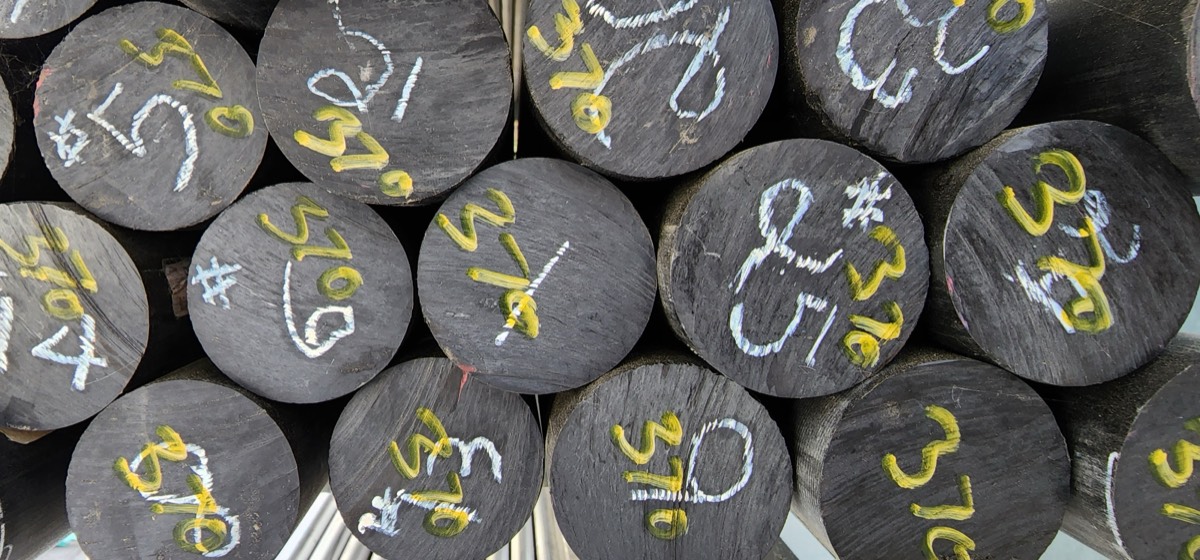
Steel round bar stock with grade markings Steel Bar Stock
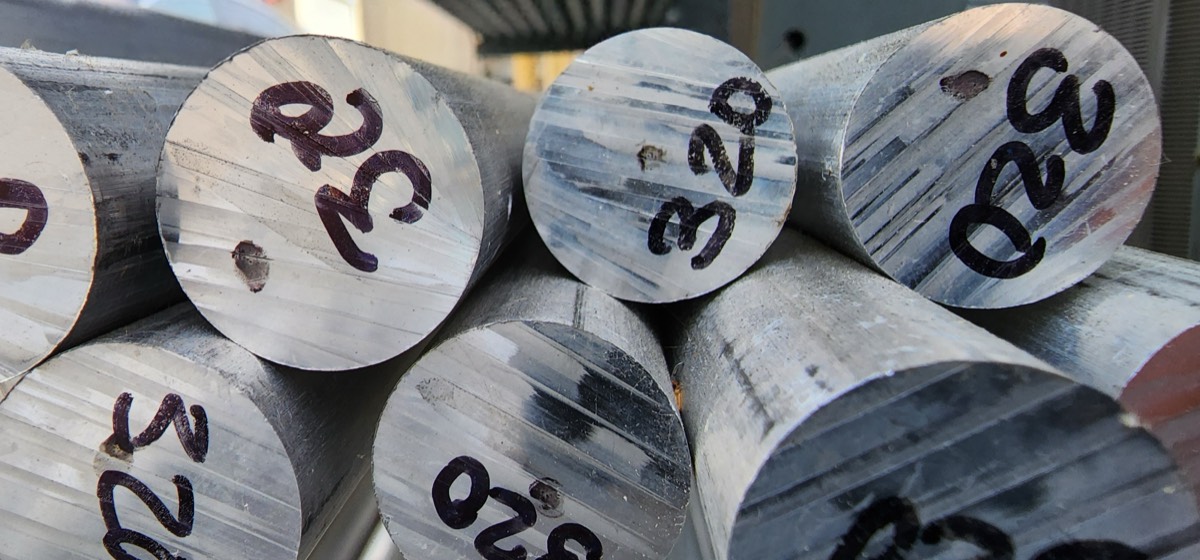
Aluminum round bar stock Aluminum Bar Stock
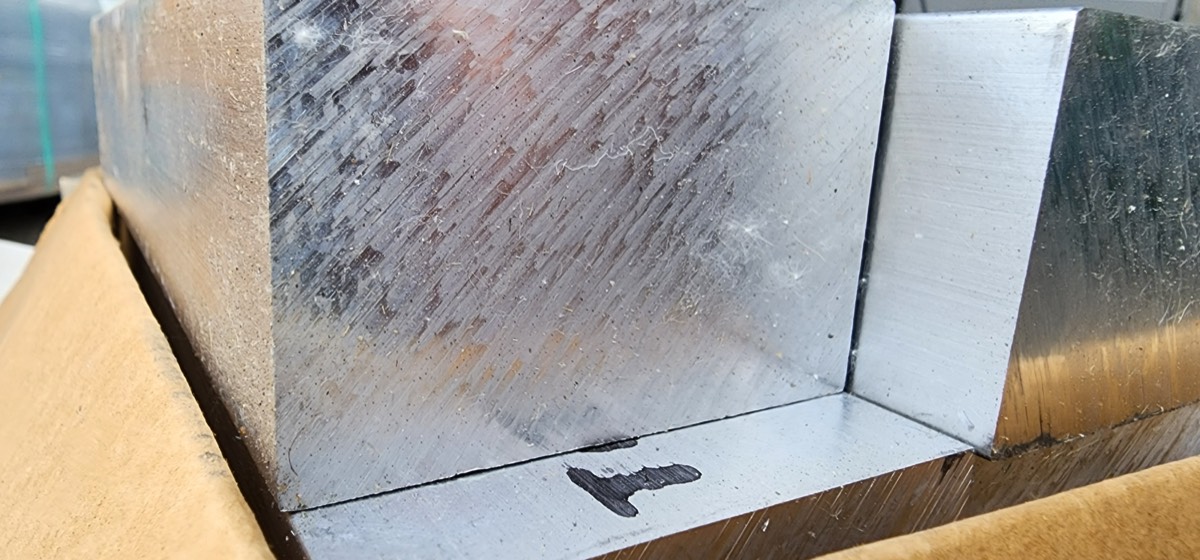
Aluminum plate and block stock Aluminum Plate Stock

Industries We Serve

Trusted by leading companies across multiple sectors

Aerospace

Precision components for aircraft and spacecraft applications. Flight-critical parts machined to exacting tolerances with full material traceability.

Automotive

Engine parts, transmission components, and custom tooling for motorsport teams and OEM production programs.

Medical

Surgical instruments and diagnostic equipment parts. Clean-room compatible finishing and documentation available.

Energy

Power generation and renewable energy components. Robust parts for demanding environments and long service life.

Marine

Marine engine parts and boat hardware components. Corrosion-resistant materials and finishes for saltwater exposure.

Industrial

Machine components, automation parts, and tooling. Custom fixtures, jigs, and production tooling for manufacturing lines.

Defense

Components for defense and government contractors. Domestic US manufacturing with material certs, lot traceability, and first-article reports.

Semiconductor

Wafer fab and semiconductor equipment components. Vacuum chamber hardware, wafer handling parts, and gas delivery fittings in anodize-ready aluminum and 316L.

Quotes in as little as 24 hours. Parts in as little as 3 days.

Email your drawings, CAD files, quantities and material to sales@digitalmachine.com for a firm quote, often within 24 hours, weekends included.

Request a Quote
Call Now Get a Quote