Engineering · Comparison
Anodize Type II vs Type III.
Both are aluminum oxide grown electrolytically on aluminum surfaces. Type II is the decorative-and-corrosion finish on most aluminum brackets; Type III is the structural wear coating that turns aluminum into a viable bearing surface. The choice comes down to whether you need cosmetic options or a hardness north of 400 HV.
| Spec | Type II (decorative) | Type III (hard) |
|---|---|---|
| Common name | Sulfuric / decorative anodize | Hard anodize |
| MIL-spec | MIL-PRF-8625 Type II (formerly MIL-A-8625) | MIL-PRF-8625 Type III (formerly MIL-A-8625) |
| Typical thickness | 0.0001–0.001″ (2.5–25 µm) | 0.0005–0.004″ (12–100 µm) |
| Hardness | 200–400 HV | 400–600 HV (harder than the base alloy) |
| Color options | Wide range — black, red, blue, gold, clear | Limited — natural gray to dark gray/black |
| Wear resistance | Moderate | High — used as wear surface |
| Corrosion resistance | Good | Excellent |
| Dimensional growth | ~100% of coating thickness adds to a diameter (≈50% per surface × 2) | ~100% of coating thickness adds to a diameter (≈50% per surface × 2); significant for tight tolerance |
| Electrical | Insulating | Insulating, higher dielectric strength |
| Cost / sq ft | $0.50–2.00 (process) | $2.00–8.00 (process; thicker = higher) |
| Best alloys | 6061, 7075, 5052 | 6061, 7075, 2024 (with masking) |
How the coating builds
It grows into the part — and out of it.
Anodizing converts the aluminum surface itself into aluminum oxide, so roughly half the coating grows down into the base metal and half builds outward. Only the outward build-up changes your dimensions — about 50% of the total coating thickness on every surface.
Dimensional growth — worked example
1.0000″ OD + Type III 0.002″ coat
→ +0.001″ per surface × 2 → 1.0020″ final
Machine the OD to 0.998″ and let the coating bring it to size — or mask off where coating isn’t allowed.
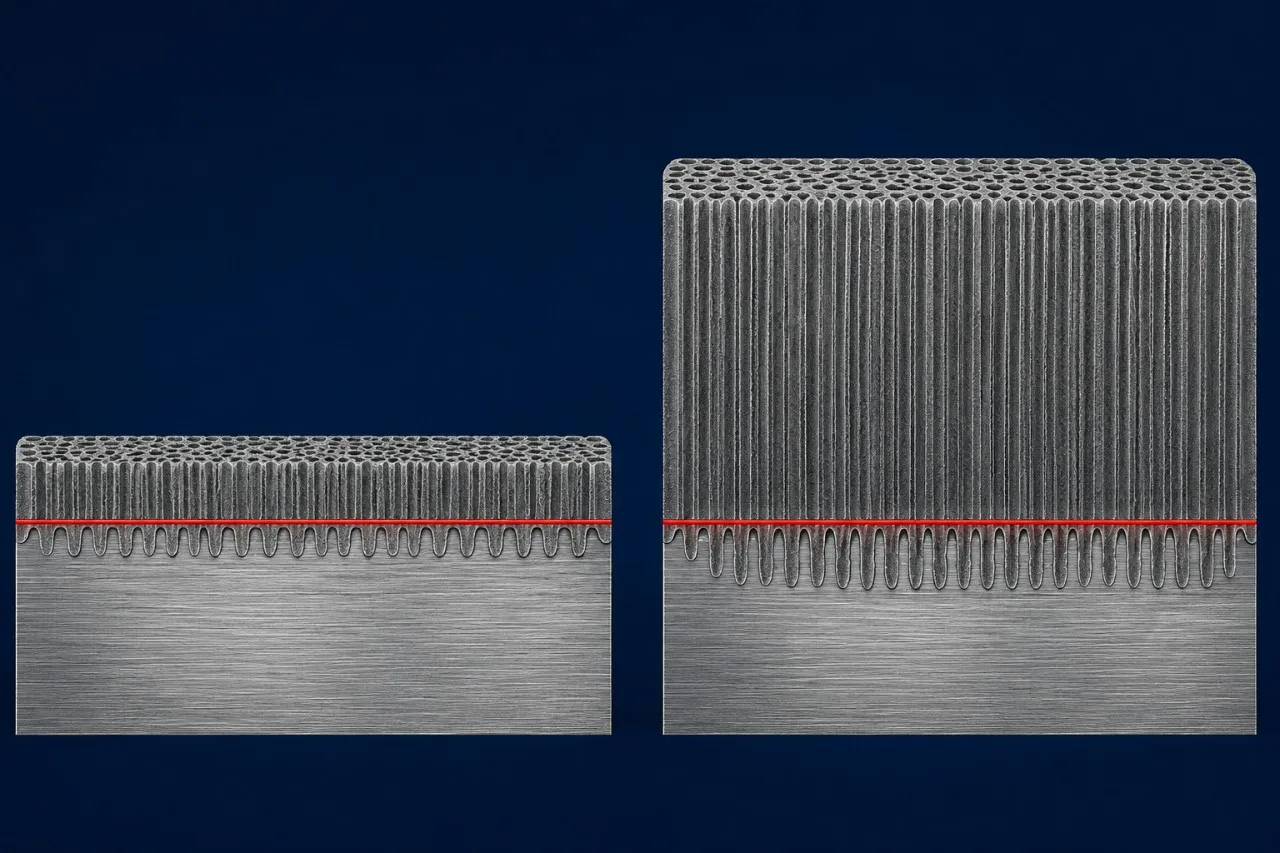 Type II · ~0.5 milType III · ~2 mil← machined surface
By the numbers
Hardness, performance, and color at a glance.
Surface hardness — Vickers (HV)
Type III is harder than the aluminum it grows on — which is why it works as a wear and bearing surface where Type II would polish away.
Performance scorecard
- Wear resistance
- Corrosion resistance
- Color range
- Dielectric strength
- Cosmetic / gloss
Color availability
The appearance difference
You can see it on the bench.
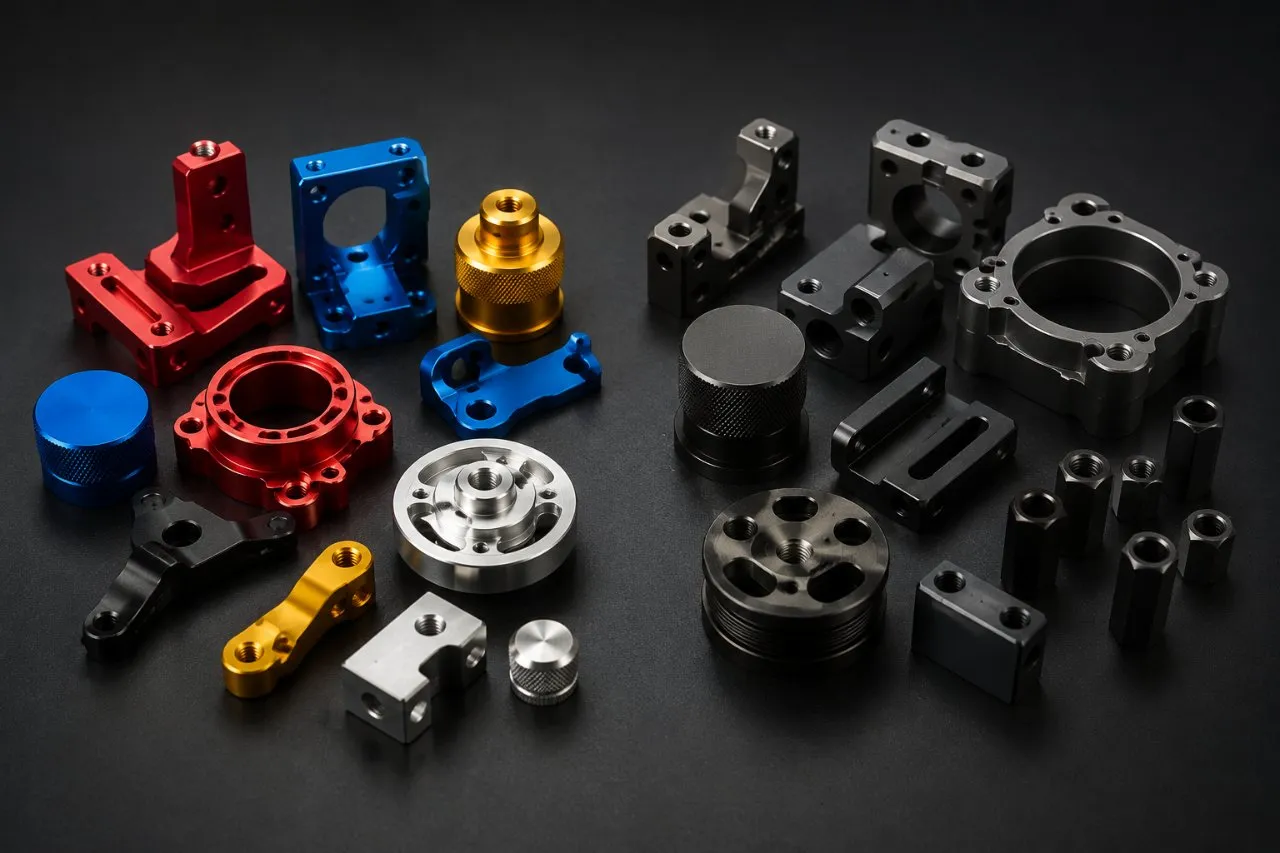
Type II takes a wide range of vivid dyed colors — the red, blue, gold, and black anodize you see on brackets and hardware. Type III hard anodize is limited to natural gray through black, but it’s far harder and built to wear.
Left: Type II decorative · Right: Type III hard anodize
Decision rule
Three questions in order.
- 1. Will the surface see sliding wear or repeated contact?
If yes, Type III. Bushing bores, bearing surfaces, sliding interfaces. Type II will polish away under wear.
- 2. Is color the priority?
If you need a specific color (red, blue, gold, etc.) or a high-gloss decorative finish — Type II. Type III is restricted to gray/black tones because the coating is denser.
- 3. Is dimensional tolerance critical?
Both grow the part. Type III at 0.002″ thickness adds ~0.001″ per surface — 0.002″ across a diameter (so a 1.0000″ OD becomes 1.002″). For tight tolerance, machine smaller and let the coating bring it to size — or specify maskoff areas where coating isn’t allowed.
- For the highest-performance combination, dye Type III.
Type III with black dye + sealer gives near-Type-II appearance with hard-anodize wear properties. Standard for aerospace and defense hardware that needs both.
- 2024 needs masking.
Copper-bearing alloys (2024) anodize poorly — the copper inclusions disrupt the oxide layer. Either mask copper-rich features or specify Type I (chromic acid anodize) instead.
Common applications
Where each fits.
Type II — decorative
Color and corrosion protection where wear is light. Dye it any color.
- Aerospace brackets
- Drone frames
- Electronics enclosures
- Color-coded fasteners
- Cable carriers
- Hardware kits
Type III — hard
Wear and bearing surfaces. Dye black for low-reflectance defense hardware.
- Hydraulic cylinder bores
- Valve trim
- Slide-rail bearings
- Weapons-mount surfaces
- PTFE self-lubricating bearings
Keep exploring
Related tools & references
All the post-machining finishes we coordinate, with specs.
Anodizes the lightest and most consistently of the common alloys.
Higher copper content anodizes slightly darker than 6061.
Machine to size accounting for anodize build-up.
Pick the base alloy before you pick the finish.
Machining aluminum that needs anodizing?
Tell us about your part and we'll get back to you promptly. Aerospace, medical, defense, and semiconductor production work welcome.Email CAD models and drawings to sales@digitalmachine.com, including ITAR, EAR, CUI and AS9100 work. Keep controlled technical data out of web forms.
First articles through full production runs